Sector
Mental health
Sector
Mental health
Sector
Mental health
Year
2022 - 2023
Year
2022 - 2023
Year
2022 - 2023
FocusMind
FocusMind
FocusMind
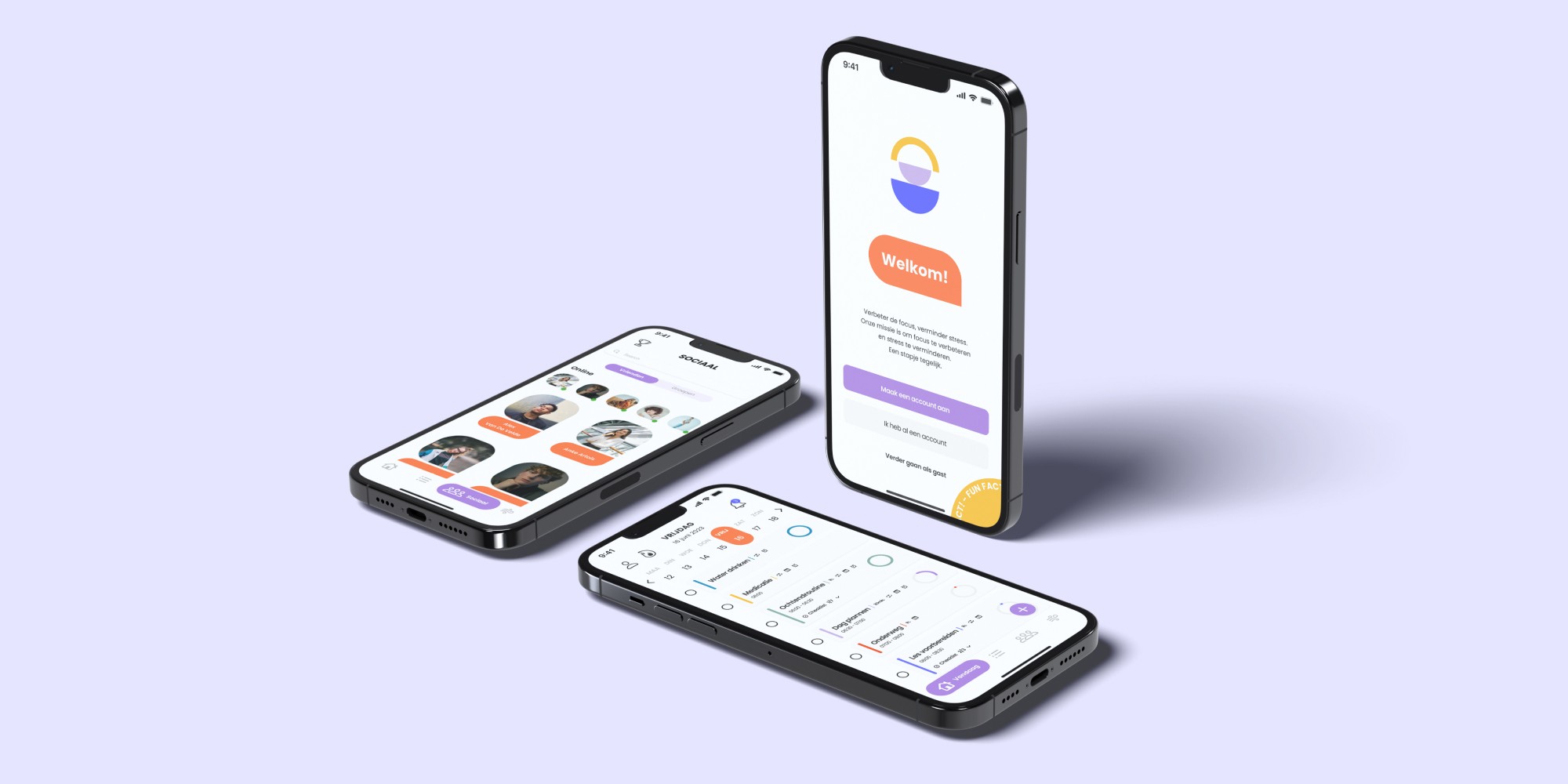
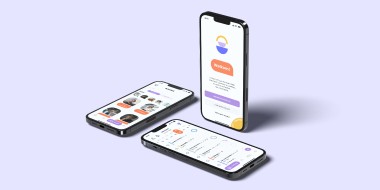
FocusMind, my Master’s graduation project at PXL-MAD School of Arts (Hasselt), explores design as a cognitive prosthesis for young adults with ADHD. By merging productivity software with behavioral psychology, I developed a solution that moves beyond task management to actively support focus and reduce stress for the neurodivergent brain.
FocusMind, my Master’s graduation project at PXL-MAD School of Arts (Hasselt), explores design as a cognitive prosthesis for young adults with ADHD. By merging productivity software with behavioral psychology, I developed a solution that moves beyond task management to actively support focus and reduce stress for the neurodivergent brain.
FocusMind, my Master’s graduation project at PXL-MAD School of Arts (Hasselt), explores design as a cognitive prosthesis for young adults with ADHD. By merging productivity software with behavioral psychology, I developed a solution that moves beyond task management to actively support focus and reduce stress for the neurodivergent brain.
Challenge
Challenge
Young adults with the inattentive type of ADHD often struggle with a lack of focus, chronic disorganization, and low motivation. These symptoms can create significant barriers in daily life and professional environments.
Young adults with the inattentive type of ADHD often struggle with a lack of focus, chronic disorganization, and low motivation. These symptoms can create significant barriers in daily life and professional environments.
The mission
How can I as an interaction designer offer young adults with ADHD a tool that can help them better manage their ADHD in everyday life?
How can I as an interaction designer offer young adults with ADHD a tool that can help them better manage their ADHD in everyday life?
Research
Research
My design process was rooted in psychological research, focusing on three core pillars to support the neurodivergent brain:
Cognitive load reduction: Psychology recommends “chunking; breaking down large, intimidating tasks into smaller, manageable units. This reduces the threshold for starting a task and provides a frequent sense of accomplishment.
Gamification & dopamine loops: Research indicates that individuals with ADHD respond well to immediate rewards. I integrated gamification, as a source of dopamine through motivational notifications, performance statistics, and badge systems to encourage task initiation and persistence.
Mindfulness as a tool: Evidence suggests that mindfulness can improve attention span, working memory, and emotional regulation. I aimed to integrate breathing exercises and focus sessions directly into the productivity flow.
My design process was rooted in psychological research, focusing on three core pillars to support the neurodivergent brain:
Cognitive load reduction: Psychology recommends “chunking; breaking down large, intimidating tasks into smaller, manageable units. This reduces the threshold for starting a task and provides a frequent sense of accomplishment.
Gamification & dopamine loops: Research indicates that individuals with ADHD respond well to immediate rewards. I integrated gamification, as a source of dopamine through motivational notifications, performance statistics, and badge systems to encourage task initiation and persistence.
Mindfulness as a tool: Evidence suggests that mindfulness can improve attention span, working memory, and emotional regulation. I aimed to integrate breathing exercises and focus sessions directly into the productivity flow.
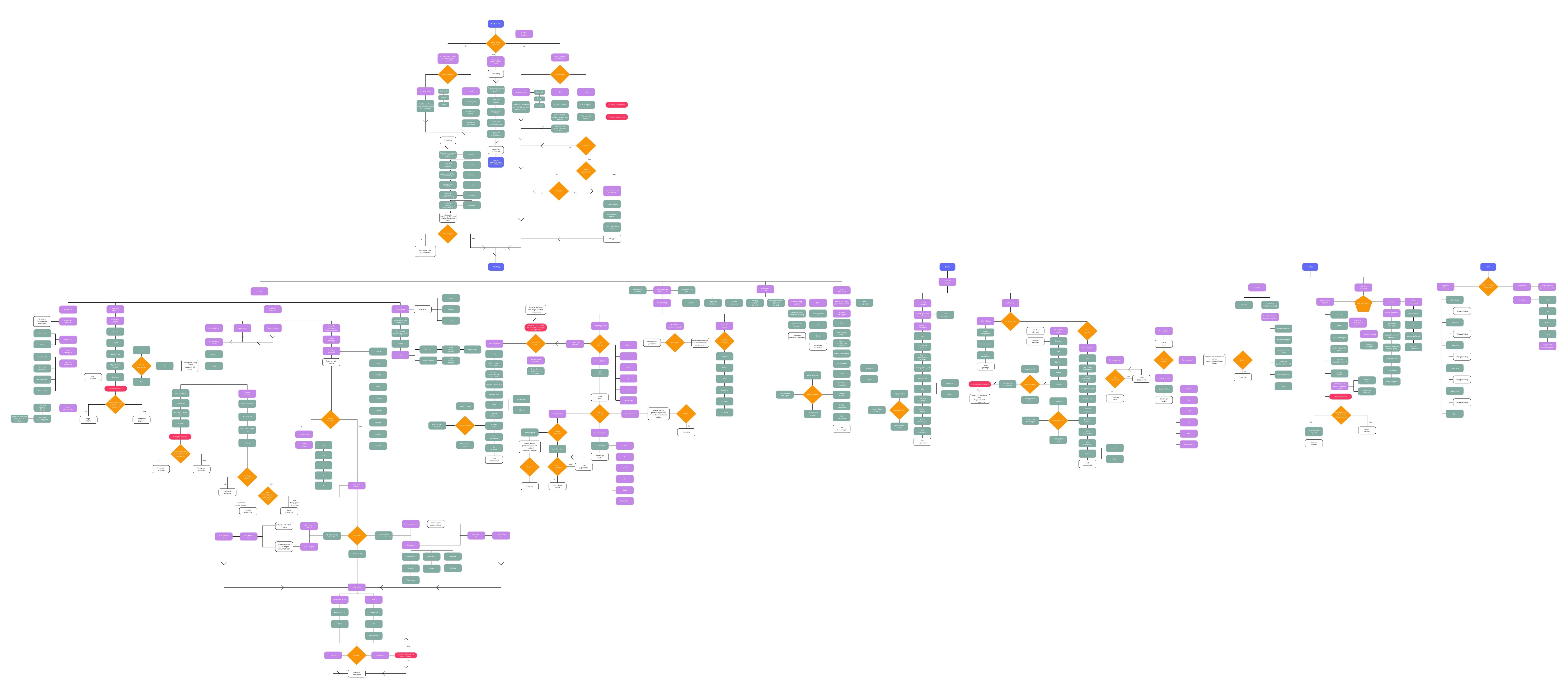
Flowchart
Flowchart
The solution: FocusMind
The solution: FocusMind
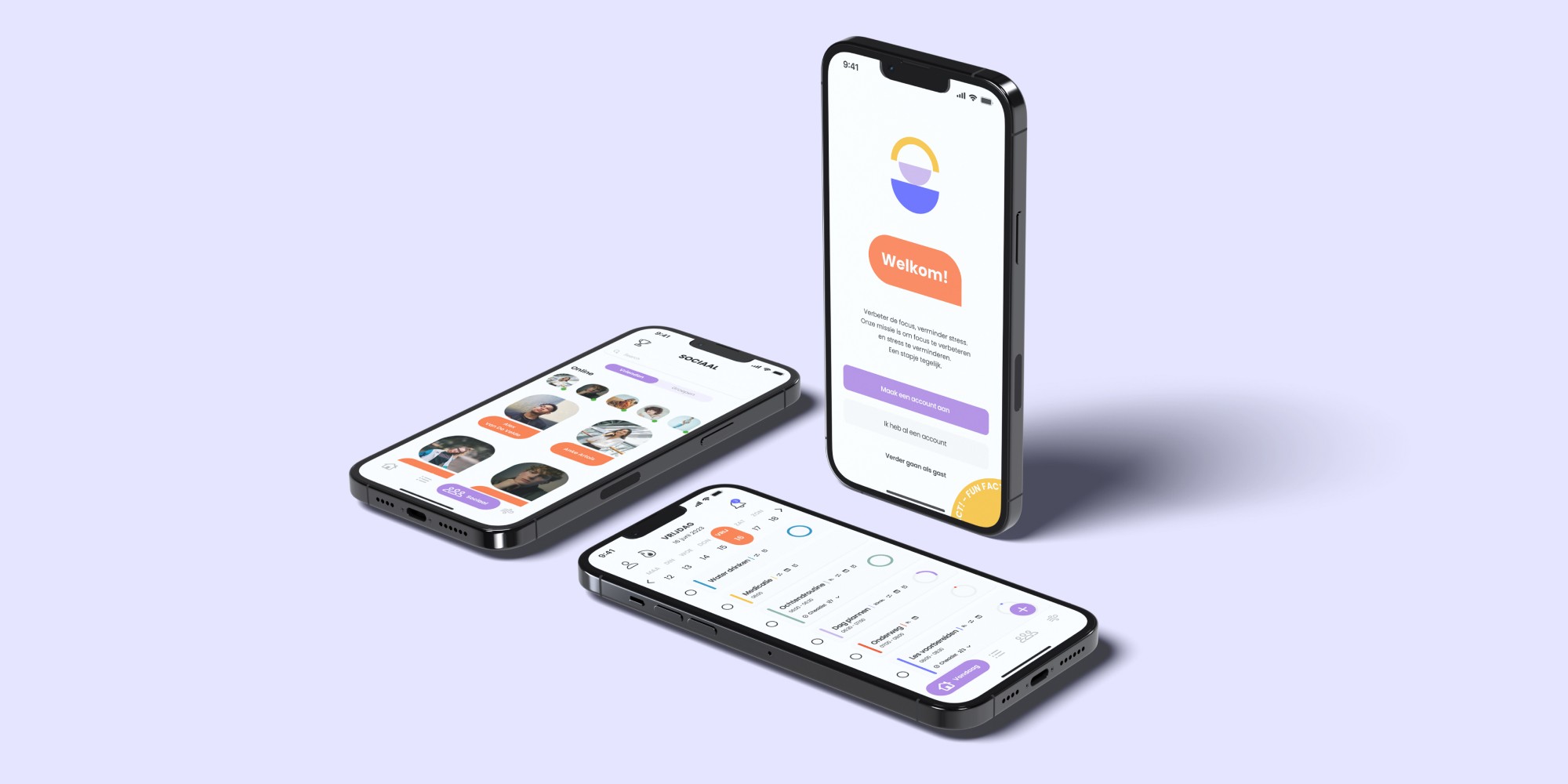
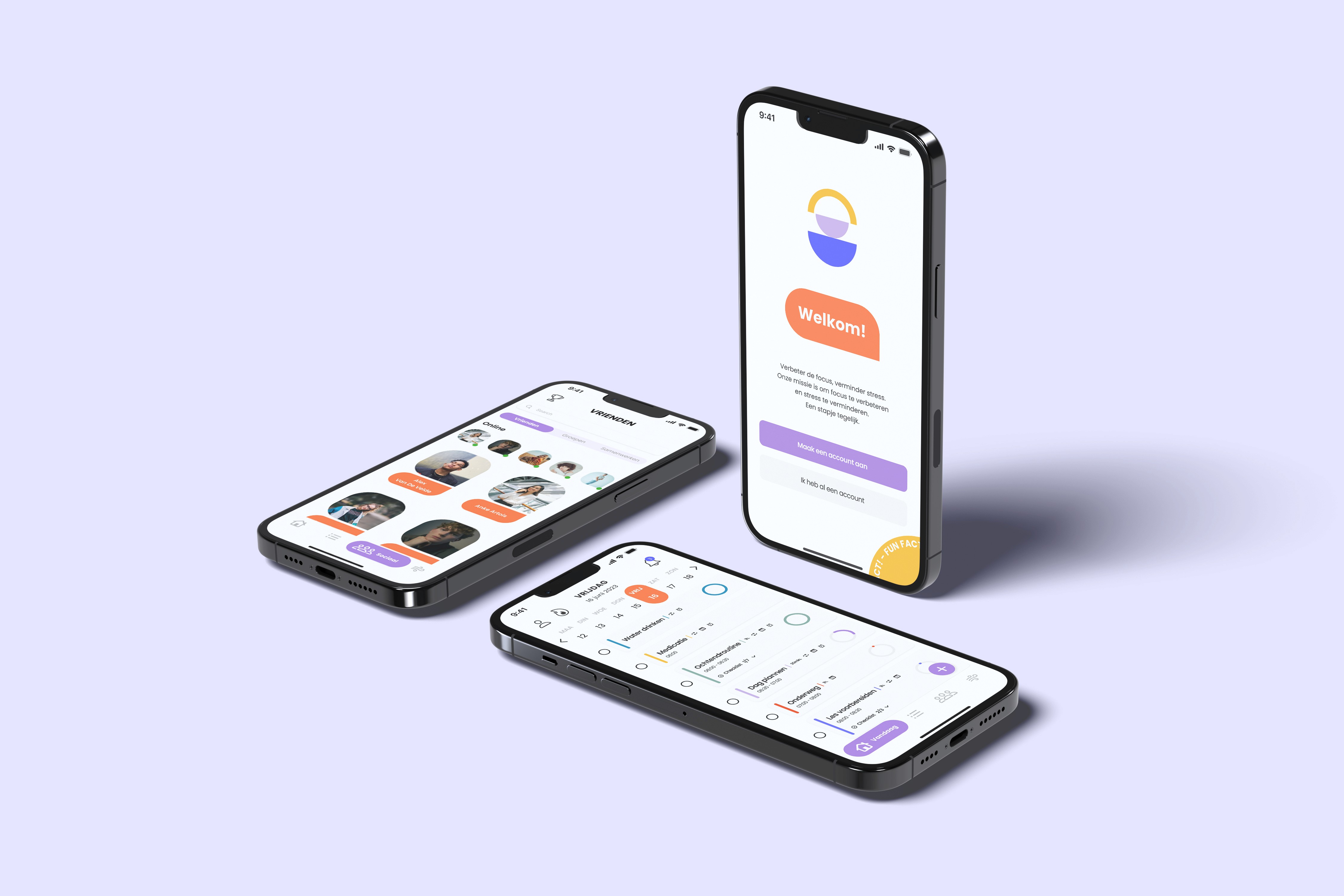
FocusMind is a mobile application that blends high-productivity features with mental well-being tools. Key features of the app are:
Dynamic task management: Users can break tasks into sub-tasks with color-coded priorities and duration estimates.
Deep focus mode: When a task timer starts, the app triggers a "distraction-free" mode, silencing notifications and restricting access to other apps to minimize cognitive interference.
Medication tracker: A simple, non-intrusive reminder system to support daily routines.
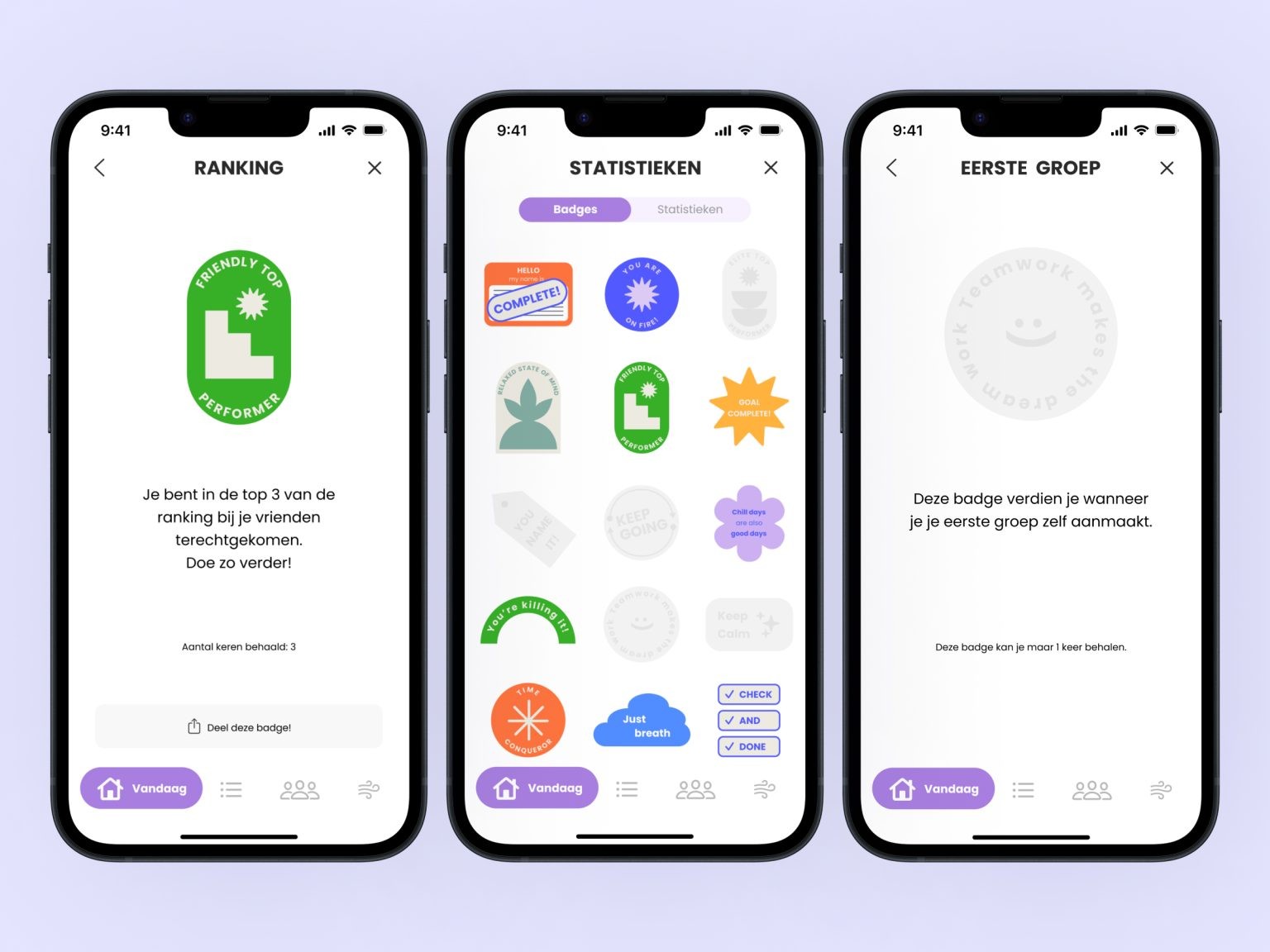
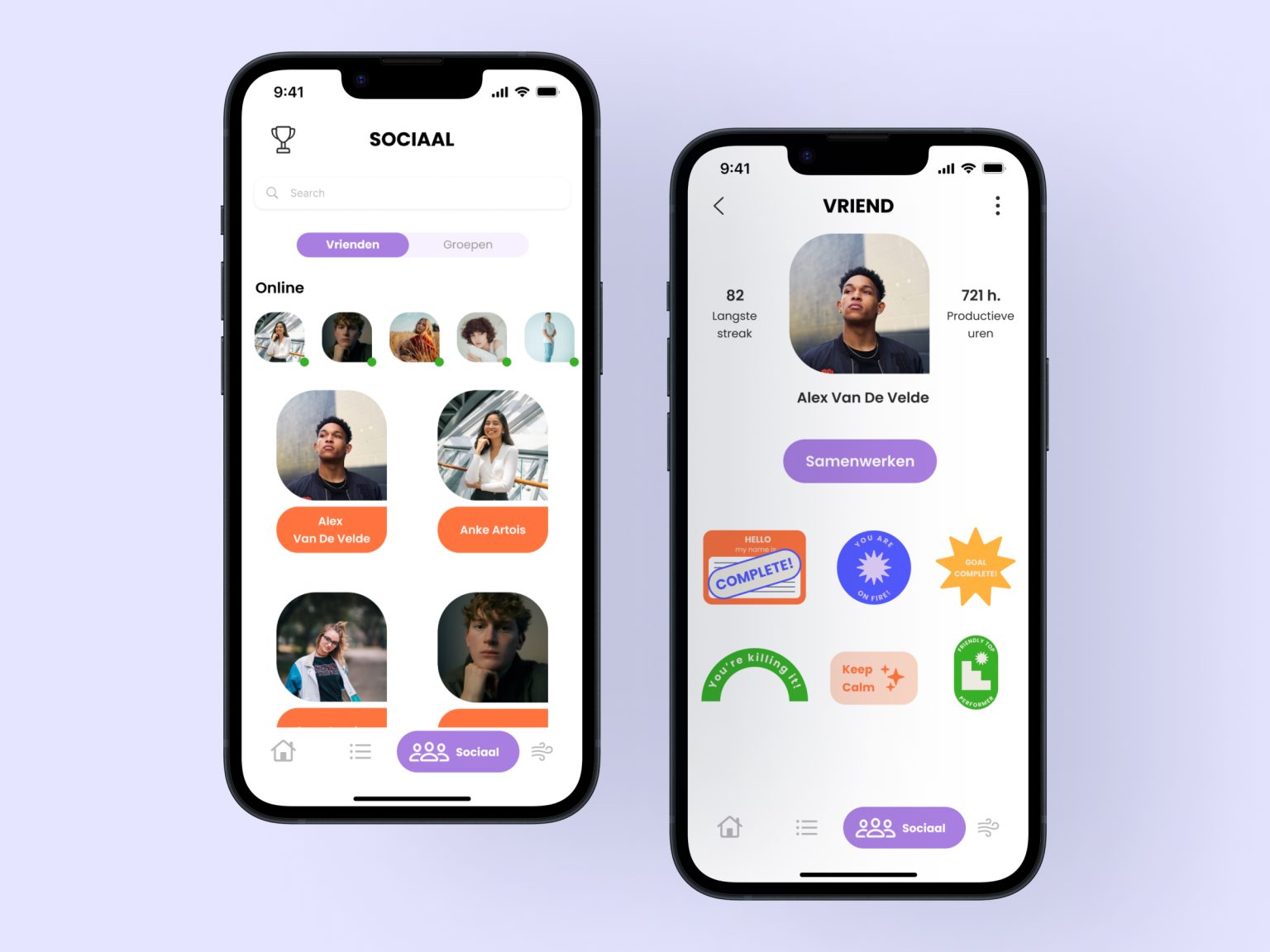
Gamified statistics: A dashboard provides insights into productivity patterns. Users earn badges for consistency and focus, utilizing social "rankings" to stay engaged through healthy competition.
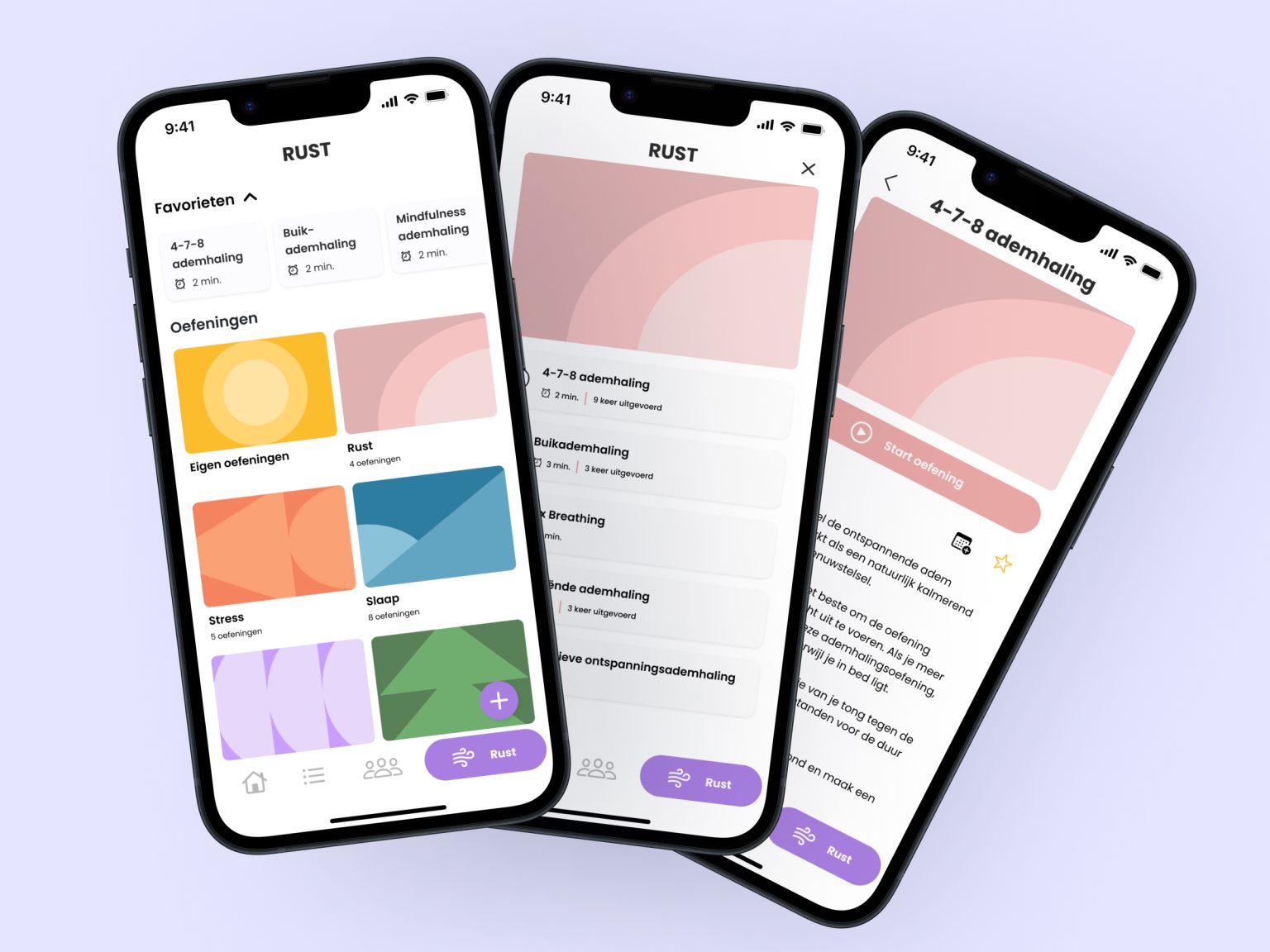
Mindfulness integration: A library of (customizable) breathing exercises helps users recalibrate their focus before or after intense tasks.
FocusMind is a mobile application that blends high-productivity features with mental well-being tools. Key features of the app are:
Dynamic task management: Users can break tasks into sub-tasks with color-coded priorities and duration estimates.
Deep focus mode: When a task timer starts, the app triggers a "distraction-free" mode, silencing notifications and restricting access to other apps to minimize cognitive interference.
Medication tracker: A simple, non-intrusive reminder system to support daily routines.
Gamified statistics: A dashboard provides insights into productivity patterns. Users earn badges for consistency and focus, utilizing social "rankings" to stay engaged through healthy competition.
Mindfulness integration: A library of (customizable) breathing exercises helps users recalibrate their focus before or after intense tasks.
Validation and usability testing
Validation and usability testing
I conducted an unmoderated usability test via Maze with 5 participants officially diagnosed with ADHD.
I focused on three critical areas:
Onboarding length
Task creation
Social collaboration features
I conducted an unmoderated usability test via Maze with 5 participants officially diagnosed with ADHD.
I focused on three critical areas:
Onboarding length
Task creation
Social collaboration features
Key insights:
Optimized onboarding: Contrary to my fears of it being too long, users found the onboarding length ideal for setting up their personal preferences.
Task flow success: The process of adding a new task was intuitive and friction-free.
Collaboration friction: The test revealed that the "Social/Collaboration" feature was not intuitive enough. Users struggled to find how to invite friends to tasks.
Based on these findings, I simplified the social interaction model, moving the "collaborate" button to a more prominent position within the task creation screen to ensure the feature was discoverable.
Key insights:
Optimized onboarding: Contrary to my fears of it being too long, users found the onboarding length ideal for setting up their personal preferences.
Task flow success: The process of adding a new task was intuitive and friction-free.
Collaboration friction: The test revealed that the "Social/Collaboration" feature was not intuitive enough. Users struggled to find how to invite friends to tasks.
Based on these findings, I simplified the social interaction model, moving the "collaborate" button to a more prominent position within the task creation screen to ensure the feature was discoverable.